
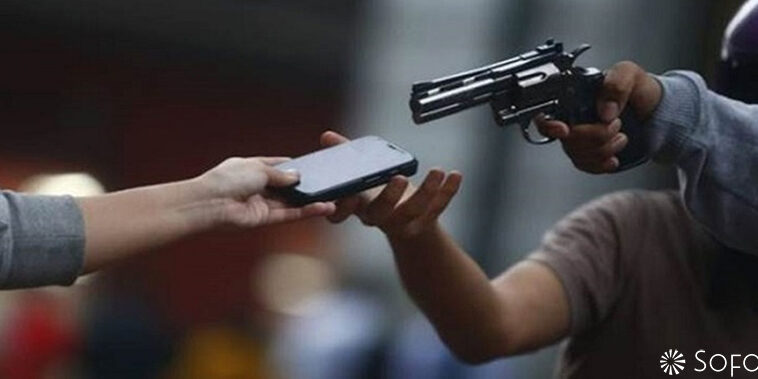
Robberies increase in metropolitan regions. Consumers have to ‘make do’ to protect banking apps and social networks. Some people have a ‘fixed smartphone’.
It’s all anyone is talking about: the increase in cell phone thefts in metropolitan areas. Citizens are afraid to use their smartphone in the back seat of the car, because a mysterious hand could appear at any moment to “snatch” the device and immediately make financial transactions. The situation has reached a point where the failure of the authorities and companies – be they banks, telephone operators or smartphone manufacturers – is evident.
In one of the most recent cases, a resident of São Paulo suffered losses of more than R$140,000. The criminals quickly moved several accounts at traditional banks and even fintechs, which should theoretically be better prepared to deal with the challenges of the digital universe. The situation was only resolved after the absurdity became public, with thousands of likes and comments on social networks.
/i.s3.glbimg.com/v1/AUTH_08fbf48bc0524877943fe86e43087e7a/internal_photos/bs/2022/a/5/Q2y0K4Qfakz8kBQwhklQ/captura-de-tela-2022-05-09-as-10.25.03.png)
Consumers feel alone, threatened by crime and abandoned by the organizations that are supposed to protect them. They need to take precautions by adopting measures that reduce the convenience of using their smartphone. Some people have gone so far as to adopt a “fixed smartphone”, which remains at home logged into apps that handle money.
It shouldn’t be like this. The problem here is – above all – one of public safety. The authorities promise measures to curb robberies, but in reality all we hear is an increase in the number of cases. You only have to open Instagram or WhatsApp to see friends complaining about the violence and the damage.
Public authorities have failed. As a result, people are turning to the digital tools in their cell phones to try to protect themselves. One of the great mysteries has to do with biometrics: so far no one has been able to explain exactly how crooks manage to bypass this form of authentication to move financial sums.
/i.s3.glbimg.com/v1/AUTH_08fbf48bc0524877943fe86e43087e7a/internal_photos/bs/2022/q/r/3BJ6rRQsisGC6R6aHGtQ/img-5481.jpg)
Some experts suggest that users are not adopting all their digital defenses. However, it’s worth considering that there are so many concerns in our daily lives… it’s impossible to remember all the steps to unlock and use the device that has become many people’s best friend.
There are a number of misconceptions:
- Banks: don’t act quickly enough to stop transactions. There are several reports of customers who have contacted them and asked for their cards and bank accounts to be blocked, but who, even after this warning, have seen the crooks cause financial losses. Where is the risk management and artificial intelligence to make sure that the customer himself is trying to move amounts 20, sometimes 30 times larger than usual?
- Telephone operators: they take a long time to block the phone line. Some victims say that the procedure takes four to six hours, when it should take a matter of minutes or seconds. We know how essential it is to take away the criminal’s ability to access the telephone network. Disconnecting the cell phone line prevents them from receiving SMS messages with two-step verification codes.
- Cell phone manufacturers: they seem to be preoccupied with developing new tools that some people would classify as “perfumery”, while they are not looking for solutions that are better suited to the Brazilian scenario. I myself have spoken to the industry’s biggest players. I asked them what was being done to prevent, for example, thieves from changing the password of that email account that is linked to the smartphone system. To this day, I haven’t had a conclusive answer.
Faced with this chaotic and bleak scenario, users need to rush to install an app with an extra password for applications that handle money. They also need to master the Time of Use tool to prevent criminals from seeing their most recent emails. They also need to memorize the new PIN for their SIM card, as the operator’s default combination has become well known to thieves.
It’s high time that the public authorities and the companies in this digital circuit came together to think of solutions. A robust movement is needed to combat crime at all ends: from physical assault to actions in digital systems.
Via Techtudo